

Culineer Team
Member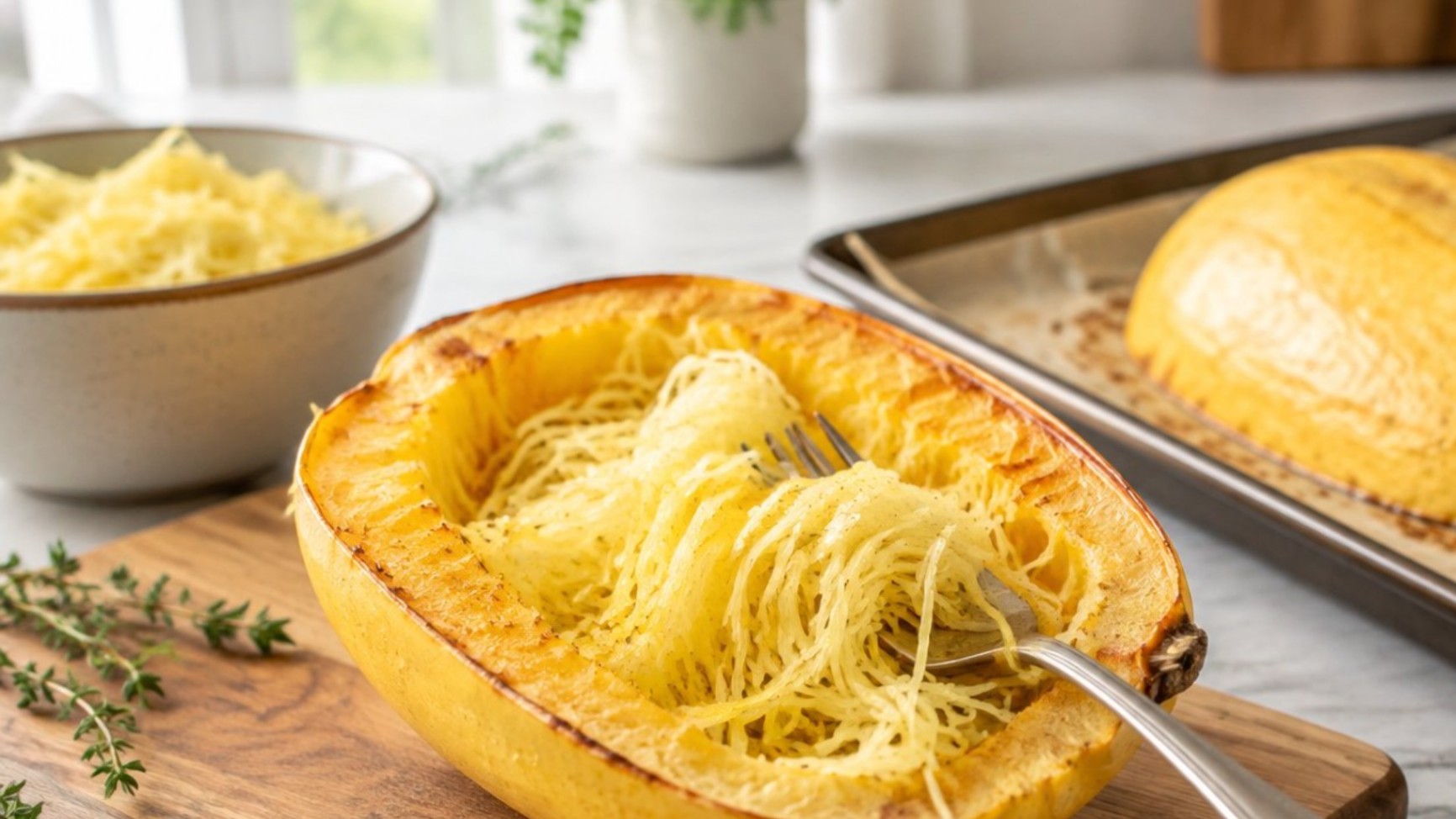
How to Cook Spaghetti Squash Without Ending Up With a Soggy Pile
The hardest part of spaghetti squash is the first cut. The rind is tough, the shape rolls, and a knife that sticks is a knife that slips. Everything after that is gentler. This guide shows how to cook spaghetti squash safely, gives the times that university extension offices publish, and explains how to keep the strands from turning watery.
Soften the Rind Before You Cut
Start by cleaning the outside. Penn State Extension says to scrub a spaghetti squash with a clean vegetable brush, and Oregon State Extension says to rinse or scrub under running water before preparing.
If the squash fights the knife, give it heat first. Oregon State's directions say that when a squash is too tough to cut, you can microwave or bake it for a few minutes until it is warm to the touch and soft enough to cut. Michigan State University Extension gives a specific version: pierce the outside and microwave it for 2 minutes before cutting it in half. Once it is open, scoop out the seeds and stringy fibers with a spoon.
How Long to Cook Spaghetti Squash in the Oven, Microwave or Pot
Oregon State allows lengthwise halves, crosswise halves or 1-inch rings, and Illinois Extension's page on spaghetti squash starts with lengthwise halves. Cooks often note that the strands wrap around the middle instead of running end to end, so a cut across the squash leaves them long and a lengthwise cut gives shorter ones. That is a kitchen observation, not an extension finding. Pick the cut by the dish you are making. Lengthwise halves double as bowls.
Extension offices publish overlapping but not identical ranges, because squash size and oven or microwave power vary.
Oregon State adds that larger squash and lower oven temperatures take longer. Penn State says a typical spaghetti squash weighs 3 to 4 pounds, so a squash well over that range needs more time, and a small one needs less.
Dry Heat Gives Drier Strands
Watery strands usually come from steam. Oregon State draws the line itself: for a roasted flavor, rub the cut edges with a little vegetable oil, place the squash cut side down, and bake it uncovered. For a steamed texture, add 1/2 cup of water to the pan and cover it with foil. If you dislike soggy squash, take the roasted route with no water and no foil.
Microwaving and boiling are moist-heat methods by design, so plan to dry the strands afterward. These habits help with any method.
Stop when the squash is tender, not collapsing. Pushing past that point leaves strands that mash together.
Let the halves rest until they are cool enough to handle. Oregon State says to let the squash sit 10 minutes or until it is cool enough to handle.
Spread the strands on a clean kitchen towel or in a colander and press gently to remove liquid.
If they still look wet, toss them in a hot, dry skillet until the surface looks dry and the strands begin to pick up a little color. No extension source covers this last tip, so judge it by eye.
Know When It Is Done by Feel, Not by the Clock
The extension pages agree on the test. The squash is done when the shell can be pierced with a fork and the flesh separates into strands. Missouri's extension publication calls the texture comparable to angel hair pasta: fibrous and tender, but slightly fragile. Culineer's spaghetti squash page describes properly cooked strands as tender with a slight crispness, which is the cue to look for.
Check at the early end of the time range. A fork raked gently across the inside of each half pulls the flesh into strands. Undercooked strands can always get a few more minutes, but overcooked ones cannot be rescued.
To choose a squash in person, type your town into the Culineer map and ask the farms it lists which of them sell winter squash.
Pick a Heavy, Hard Squash at the Farm Stand
Missouri's extension publication lists what to look for: a squash that is heavy for its size, hard, with blemish-free skin. The more yellow the squash, the riper it is. The exterior should be thick and free of mold, bruises and spots. Culineer's October produce guide adds a dry, corky stem to the checklist, and the spaghetti squash page lists the season as September and October.
Store It Whole, Cut or Cooked
A whole, uncut squash keeps best slightly below room temperature in a cool, dry spot. Missouri gives a range of 55 to 60 °F and says it can last up to three months, and Penn State likewise says up to three months in a cool, dry place. Michigan State gives a longer window, up to 6 months at 50 to 60 °F, so sources differ and the shorter one is the safer plan. Avoid damp places. When the skin softens, it is time to use or toss the squash, and if it leaks liquid, discard it.
Once cut, the squash goes in the refrigerator, wrapped tightly in plastic wrap or in an airtight container. Missouri says cut pieces keep up to five days. Cooked strands follow a different clock: Oregon State says to refrigerate leftovers within 2 hours, and the USDA's leftovers guidance gives cooked foods 3 to 4 days in the refrigerator.
Spaghetti Squash Is Mild, So Season to the Dish
Spaghetti squash is mild. Illinois Extension notes it is not as sweet as acorn or butternut, which is why it tastes closer to pasta. Oregon State suggests salt and pepper, nutmeg, or onion or garlic powder, then toppings such as pasta sauce, sauteed mushrooms or onions, cheese, beans or cooked chicken.
For a recipe, Culineer has spaghetti squash boats, which use the halves as serving bowls. If you want a sweeter, denser squash for soup or roasting, the winter squash page covers butternut, acorn and the rest of the family.
Spaghetti squash is one of many fall crops from nearby growers. Join Culineer free for more fall ingredients and recipes to match.
Frequently Asked Questions
Can I cook a spaghetti squash whole?
Yes, but pierce it first so it cannot burst. Michigan State Extension says to pierce the squash with a sharp knife, then bake it for one hour at 375 °F or microwave it for 10 to 12 minutes and let it stand 5 minutes. The same source says cooking a whole squash is easier but takes longer, and you remove the seeds afterward.
Can I cook spaghetti squash in a slow cooker?
Yes, with long, low heat. Illinois Extension suggests a slow cooker with 2 cups of water on low for 8 to 9 hours. North Dakota State University Extension cooks a 4-pound squash, cut in half with seeds removed and set cut side up with water added, on low for 6 to 7 hours or high for 3 to 4 hours, until the squash is easy to shred.
How long does spaghetti squash take in a pressure cooker?
The extension pages checked for this article give no pressure cooker timing, so a precise number would be a guess. Follow the manual for your own appliance, use the same fork test, and check the early side of any suggested time. You are finished when a fork slides through the shell and the flesh pulls into strands.
Can I freeze cooked spaghetti squash?
North Dakota State University Extension's freezing method is written for winter squash generally: cook it until soft, remove the pulp, cool it, and pack it in freezer-safe containers leaving 1/2 inch of space. It says mashed squash should not be canned. It does not describe how long, separated strands hold their texture, so expect softer results.
Do I need to peel spaghetti squash?
No. You scrape the strands out of the cooked shell, so the rind never gets eaten. What matters is the outside cleaning step. Penn State's directions call for a clean vegetable brush on the whole squash before cutting, and Oregon State recommends washing hands with soap and water before handling fresh vegetables.