

Culineer Team
Member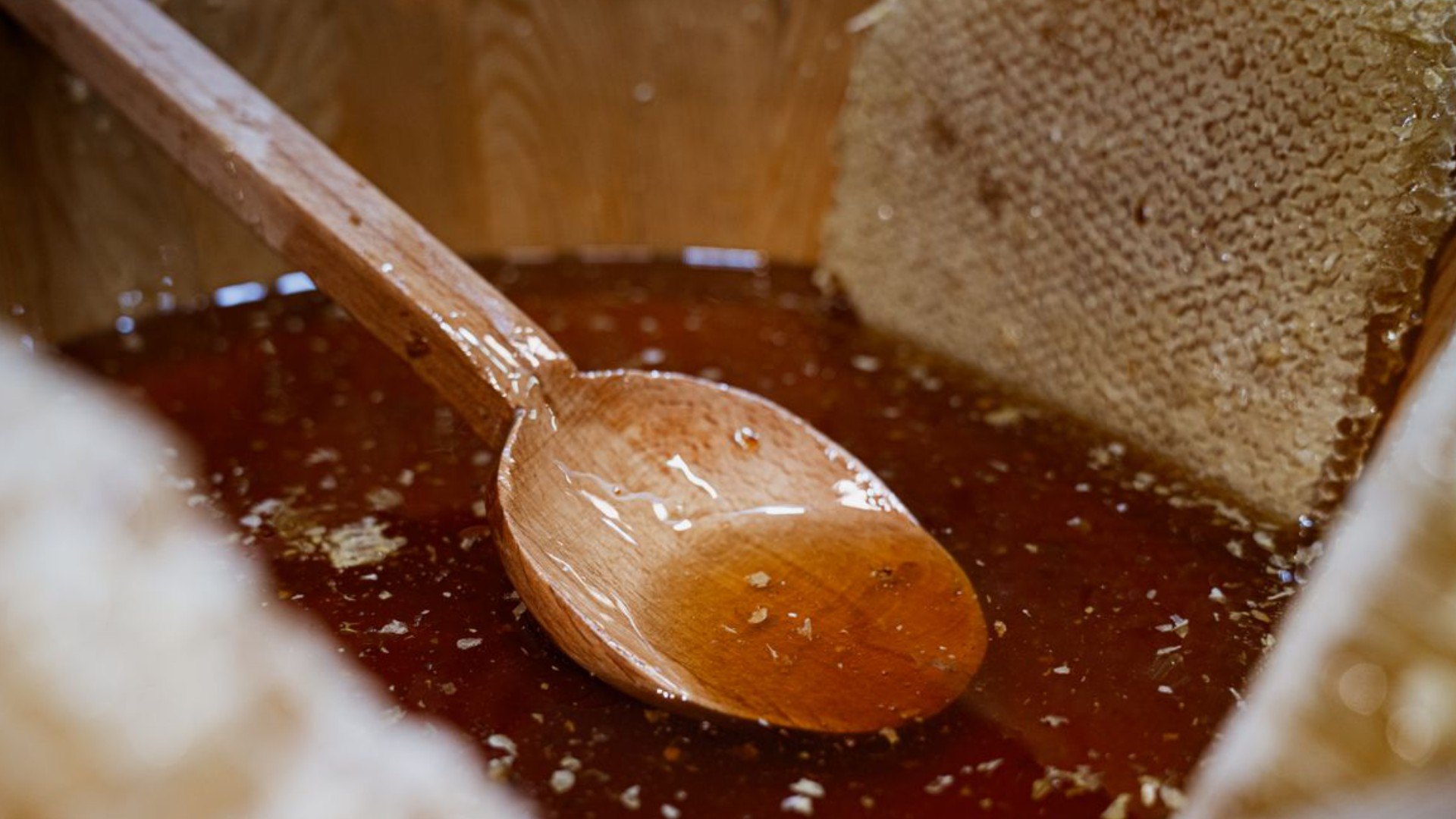
Local Honey Near Me: Beekeepers and Farms by Area
September is one of the best months of the year to buy honey in Pennsylvania, New Jersey,y and Maryland. Summer extraction is done, jars are full, and beekeepers have goldenrod and knotweed honey coming in through early October. Flavor at this point in the season runs from pale and floral to dark and almost malty.
If you're searching for local honey near me, the fastest reliable routes are farmers' markets, farm stands, and buying straight from a beekeeper's apiary. Each one lets you ask the question that settles authenticity: where do the hives sit, and what were the bees working when this jar was filled?
Below, you'll find honey producers grouped by area across Greater Philadelphia, the Lehigh Valley, Pittsburgh, Central and South Jersey, and the Baltimore corridor. You'll also get plain explanations of raw, unfiltered, and floral source terms, plus a fair look at the allergy claim, so you can pick a jar by taste and traceability instead of label design.
Where Can You Buy Local Honey Near Me?
Four routes cover almost every honest jar in the Mid-Atlantic: farmers markets, farm stands, apiary pickup, and county beekeeping associations. Prices for a one-pound jar in this region run roughly nine to fifteen dollars depending on varietal and packaging.
The difference between these routes is how much you can ask, and how fast you can get an answer. A market vendor standing behind their own frames will tell you the township their hives sit in. A shelf in a gift shop will not.
Start With Farmers Markets and Farm Stands
Farmers markets remain the highest hit rate. Most markets in PA, NJ, and MD carry at least one honey vendor, and many hold a producer-only rule that keeps resellers out.
Ask the vendor whether they keep the bees themselves. Real beekeepers answer with hive counts, yard locations, and what bloomed badly this year. Someone bottling bulk honey changes the subject.
Farm stands work differently. A stand attached to an orchard or vegetable farm often sells honey from a beekeeper who keeps hives on that same land for pollination, which is about as traceable as it gets. Ask at the register whose bees they are.
What to check before you hand over cash:
Whose name and address are on the label, and is it a township you recognize
Whether the vendor keeps the hives or buys the honey to resell
The floral source, or at least the month it was extracted
Whether they offer a taste, which most beekeepers will
Timing matters more than people expect. Roughly 26 percent of market shoppers say the single thing that stops them is simply forgetting the market is on, so check the day and hours before you plan the trip.
Farm stands and markets cover the everyday jar. For a specific varietal or a five-pound tub, go closer to the source.
Buy Straight From an Apiary or Local Beekeeper
Buying straight from the hive gets you the widest choice and the best price per ounce. Many small-scale beekeepers in PA and NJ sell from a farm store, a porch cooler, or by arranged pickup, and they keep varietals separated by extraction date.
This is where you find the honey that never reaches a market table. Spring black locust from Chester County. Late summer basswood. Fall goldenrod that smells sharp in the jar and mellows into something rich after a few weeks.
Bulk changes the math. A gallon of local honey weighs about twelve pounds and often costs less per pound than four separate one-pound jars. If you bake regularly or run a household of three or four, that's a real saving.
A few verified apiaries and honey producers across the region:
Exton Bee Company in Chester Springs, PA
Meadowset Farm & Apiary in Landenberg, PA
Baby Bee Apiaries in Carlisle, PA
Bedillion Honey Farm in Hickory, PA
Zenja's Honey Farms in Toms River, NJ
Call or message before you drive. Small operations sell out of a varietal in a week, especially anything dark.
Use Beekeeping Associations and Producer Directories
County beekeeping associations are the most underused tool for finding honey producers. Nearly every county in Pennsylvania, New Jersey, and Maryland has one, and most publish a member list with contact details and what each member sells.
These lists carry a quiet advantage. Association members attend meetings, take state inspections seriously, and are known to other beekeepers, so a bad actor stands out quickly. State apiary registration programs also exist in all three states, which means hives have a paper trail.
Producer directories fill the gap between associations and markets. The Culineer producer directory lists beekeepers, apiaries, and farm markets across the mid-Atlantic with locations, so you can see who is close before you commit to a drive. Cross-check current hours with the producer directly, since small operations adjust their schedules week to week.
Once you know where to look, the next question is who is actually near you.
Verified Sources Across Pennsylvania, New Jersey, and Maryland
Honey production in this region concentrates in three bands: the Piedmont counties west of Philadelphia, the sandy Pinelands and farm belt of Central and South Jersey, and the mixed woodland and pasture country around Pittsburgh and Western PA. Each produces a distinct flavor profile.
Below, producers are grouped by area with what they're known for. Hours, stock, and pricing change fast at this scale, so confirm before you travel.
Greater Philadelphia and the Lehigh Valley
Chester County is the densest cluster of beekeeping in southeastern PA. The mix of horse pasture, hedgerow, and unsprayed field edge gives spring honey a light, clean character and fall honey real depth.
Verified producers in and near the area:
Exton Bee Company, Chester Springs, PA. Small apiary operation in western Chester County.
Meadowset Farm & Apiary, Landenberg, PA. Southern Chester County, close to the Delaware line.
Baby Bee Apiaries, Carlisle, PA. Cumberland County, useful if you're west along the turnpike.
Lehigh Valley shoppers have an easier route through farm markets. Orchards like Grim's Orchard and Family Farms in Breinigsville stock local honey alongside their own fruit, and honey kept on an orchard site is often produced by the same bees pollinating those trees.
In Pittsburgh and Western PA, look at Russellton Bee Works and Sugar Hollow Apiary in Apollo, Armstrong County. Bedillion Honey Farm in Hickory, Washington County, is another established name in the southwest.
Head east across the Delaware and the floral picture changes completely.
Central and South Jersey
New Jersey honey splits along the soil line. North and central counties give clover and wildflower honey from farmland and hedgerow, while the Pinelands produce a darker, more mineral honey shaped by cranberry bog and blueberry field bloom.
Two verified producers worth knowing:
Zenja's Honey Farms, Toms River, NJ. Ocean County, on the edge of Pinelands forage.
Bob's Buzzy Bees, Yardville, NJ. Mercer County, in the farm belt south of Trenton.
Blueberry honey is the one to ask about in Atlantic and Burlington counties. It comes off in late May and June, tastes faintly of the fruit, and rarely lasts past autumn.
Orchards double as honey stops here too. Battleview Orchards in Freehold runs a farm market that carries local jars alongside their apples and cider.
Maryland's honey country runs on a different rhythm again.
Baltimore, Maryland's Eastern Shore, and Central Maryland
Maryland has three honey landscapes worth separating. The Eastern Shore gives light honey from soybean and clover bloom. Central Maryland and the Piedmont around Baltimore County produce tulip poplar honey, which is the signature honey of the region. Western Maryland leans toward wildflower and locust.
Tulip poplar is the one to seek out. It comes off in late May, pours dark amber, and tastes of molasses and smoke without any bitterness. Baltimore County and Howard County beekeepers sell it under that name or as spring wildflower.
Baltimore corridor shoppers have strong farmers market options through the week, and most carry at least one association member selling their own extraction. Honey tastings show up at fall markets, where you can compare spring and fall honey from the same yard side by side. That side-by-side comparison teaches more in five minutes than any label.
Maryland's state apiary program registers hives, so a beekeeper can tell you their registration status if you ask. Most are happy to.
Knowing where the hives sit is one half of the picture. What the words on the jar mean is the other half.
What Local, Raw, and Unfiltered Honey Actually Mean
Local, raw, and unfiltered describe three different things, and only one of them has any regulatory weight. Local refers to distance. Raw refers to heat. Unfiltered refers to what was strained out. A jar can be all three, or one of the three.
The USDA Agricultural Marketing Service defines local food as product origin within 400 miles of the point of sale, or origin and market within the same state. That's the closest thing to an official line, and it's broad enough that a jar from four states away can still be sold as local.
For honey, that definition is too loose to be useful. Ask about the county instead.
How to Ask Where the Hives and Floral Source Are Located
One question sorts nearly everything: "Where are your hives?" A beekeeper will name a township, a farm, or a road. Someone reselling bulk honey gives you a state, or nothing.
Follow up with what the bees were on. Spring, summer, and fall honey from the same yard taste distinct because the floral source changes with the bloom. A good producer knows which extraction each jar came from.
If the honey came from hives more than a county or two away, it isn't local honey in any way that matters to flavor or pollen content. That's fine, as long as the label says so.
Raw Honey vs. Filtered Honey
Raw honey is honey that hasn't been heated past hive temperature, roughly 95°F, and hasn't been pressure filtered. It keeps its pollen, natural enzymes, and traces of propolis. It also crystallizes faster, which is a sign of authenticity.
Commercial honey is often heated to around 150°F and pushed through fine filters. That removes pollen, delays crystallization, and gives the clear jar that sits on a supermarket shelf for two years. It's still honey. It just carries less of what came out of the hive.
Unfiltered sits between the two. Most small beekeepers strain honey through a coarse mesh to remove wax and bee parts, then bottle it. That's straining, not filtering, and the pollen stays in.
What USDA Rules Do and Do Not Define
The USDA grades honey (Grade A, B, and C) on clarity, moisture, flavor, and absence of defects. Those grades say nothing about where the honey came from or whether it was heated.
There's no federal legal standard behind the word "raw" on a honey label. No agency inspects a jar to verify it. The word carries weight only because the beekeeper's name is attached to it.
"Local" is the same. No certification, no verification, no penalty for stretching it. Which is why a name, a town, and a face at a stall are worth more than any word printed on a lid.
How to Spot a Traceable Jar of Honey
Real honey with a real address on it tells you five things without you having to ask:
The beekeeper's name and a specific town or township, not just a state
The floral source or season (spring wildflower, goldenrod, tulip poplar)
Net weight in ounces or pounds, since honey is sold by weight
The year or extraction batch, where the producer tracks it
A phone number or email you could use to ask a follow-up question
Anything vague on that list is worth a question at the stall. Now the more useful decision: which honey to buy for what you cook.
Choose Honey by Floral Source and Flavor
Floral source drives flavor more than anything else, including whether the honey is raw. Light honeys taste floral and mild. Dark honeys taste malty, sharp, sometimes almost savory. Color is a reliable shortcut.
Antioxidant content follows the same pattern. Darker honeys carry more phenolic compounds than pale ones, which is why buckwheat honey tastes and measures so differently from clover.
Wildflower and Clover Honey for Everyday Cooking
Wildflower and clover honey are the workhorses. Both pour light amber, taste clean and floral, and won't dominate whatever they go into. This is what you want for baking, dressings, and anything where honey supports rather than leads.
Wildflower is a catch-all for honey from mixed blooms, which means it changes yard to yard and season to season. Spring wildflower from Chester County tastes nothing like fall wildflower from the same hives. Ask which you're getting.
For cooking, these are the honeys that carry a honey and basil berry sandwich or a blackberry honey cocktail without fighting the fruit. They also dissolve fast into warm liquid, which matters for dressings.
Buckwheat Honey and Other Dark, Robust Varietals
Buckwheat honey is nearly black, thick, and tastes of molasses and iron. It's the most polarizing honey grown in this region, and the one worth trying before you commit to a full jar.
Pennsylvania and New York buckwheat honey shows up at markets in late summer and fall. Use it where you'd use dark brown sugar or blackstrap: gingerbread, barbecue glazes, marinades for pork, a spoon in strong coffee.
Other dark honeys to look for in PA, NJ and MD:
Tulip poplar, late May, dark amber, smoky and molasses-like
Goldenrod, September into October, medium amber, sharp in the jar and mellow after curing
Knotweed, late summer, dark and slightly fruity, common near stream corridors
Black locust, late May, very pale, resists crystallizing for months
Sourwood honey from the southern Appalachians and orange blossom honey from Florida both turn up at mid-Atlantic markets, and Texas honey travels north too. All good honey. None of it is local to PA, NJ, or MD, so read the label.
Comb Honey and Seasonal Regional Varieties
Comb honey is honey still in the wax the bees built. It's the least processed honey you can buy, and it sells fast because beekeepers can only produce it in a strong nectar flow.
A section of comb runs higher per ounce than liquid honey, and it eats differently: chewy, waxy, intensely floral. Put it on a cheese board with a sharp cheddar, or on toast with butter underneath. Don't cook with it.
Cut comb and chunk honey are the middle ground. A piece of comb sits in liquid honey in the jar, which gives you both textures. Ask a beekeeper in June and July, since that's when the comb comes off.
Once the jar is home, a few practical things come up that catch people out.
Know What You Are Buying Before You Leave the Stall
The two questions beekeepers field most are why the honey went solid and whether it helps with allergies. Crystallization is normal and reversible. The allergy claim is weaker than the internet suggests.
Ask both at the stall. A beekeeper who answers the allergy question honestly is a beekeeper worth buying from.
Why Crystallization Is Normal
Honey crystallizes because it's a supersaturated sugar solution, and glucose comes out of solution over time. Honey high in glucose (clover, goldenrod, canola) sets within weeks. Honey high in fructose (black locust, tulip poplar) stays liquid for a year or more.
Crystallized honey hasn't spoiled and hasn't gone bad. It's the same honey with a different texture, and many people prefer it spreadable. Raw honey crystallizes faster because the pollen and wax fragments give the crystals something to form around.
To return it to liquid, sit the jar in water at around 100°F to 110°F until it clears. Higher heat degrades the enzymes and dulls the flavor, which is the one thing worth being careful about. Honey stored below 50°F crystallizes faster, so the pantry beats the fridge.
Questions to Ask a Honey Producer
Five questions cover everything that matters, and none of them take more than a minute at a stall:
Where are the hives, by township or county
What was blooming when this batch was extracted
Was the honey heated, and to what temperature
How was it strained, and is the pollen still in it
Do you have last season's honey and this season's to compare
Home cooks who buy a jar every few weeks find the last question the most useful. Tasting two extractions side by side teaches you what the season did to the flavor.
Beekeepers enjoy these questions. They spend most of their time explaining varroa mites to people who didn't ask.
Local Honey and Seasonal Allergies: What the Evidence Supports
Local honey is not an established treatment for seasonal allergies. The theory sounds reasonable: that eating local pollen builds tolerance, but the clinical evidence doesn't support it.
The pollen that triggers seasonal allergies comes from wind-pollinated plants: ragweed, grasses, oak, birch. Bees don't work those plants. The pollen in honey comes from insect-pollinated flowers, which is a different set of species entirely.
Buy local honey because it tastes better and you know where it came from. If seasonal allergies are affecting you, talk to a physician about treatments with evidence behind them.
When a Larger Jar or Bulk Purchase Makes Sense
Buy the gallon when you bake weekly, keep a large household, or preserve fruit through autumn. Honey stores indefinitely in a sealed container at room temperature, so there's no spoilage risk in buying ahead.
A gallon weighs roughly twelve pounds and costs meaningfully less per pound than one-pound jars. Decant into smaller jars for the counter and keep the bulk container sealed and out of light.
Skip the bulk buy if you're chasing a specific varietal. Comb honey, buckwheat, and tulip poplar are worth buying in small quantities from several producers so you can compare. That's a better use of forty dollars than a single gallon of wildflower.
Choose a Jar You Can Trace and Taste
The honey worth buying comes from someone who names the township their hives sit in and tells you what was blooming. That answer, given easily at a farmers market or farm stand, is the whole test.
Start with a light wildflower or clover for everyday cooking, then add one dark varietal to see how different honey can taste. Buckwheat, goldenrod,d or tulip poplar will change how you use it. Ask about comb honey in June and July, and about fall extraction from September onward.
Confirm hours and stock with the producer before you drive, since small apiaries sell through a varietal quickly. Then bring the jar home and put it to work: browse Culineer recipes that use honey, or find a nearby beekeeper or honey producer on Culineer and check the listing for current details.
Frequently Asked Questions
Where Can I Buy Local Honey Near Me?
Farmers markets, farm stands, and buying straight from an apiary are the three most reliable routes across Pennsylvania, New Jersey,ey and Maryland. County beekeeping associations publish member lists with contact details for producers selling directly. Confirm hours and stock before traveling, since small operations sell out of individual varietals quickly.
Is Raw Honey Always Local Honey?
No. Raw describes how the honey was handled, meaning it was not heated past hive temperature or pressure filtered. Local describes distance from the hives to the point of sale, so a jar can be raw and still come from another region entirely.
How Can I Tell Whether Honey Is Truly Local?
Ask the seller where the hives are located and what was blooming when the batch was extracted. A beekeeper will name a township, a farm, or a specific road. Neither the word local nor the word raw is verified by any agency on a honey label, so the producer's name and address carry the weight.
Does Local Honey Help With Seasonal Allergies?
Local honey is not an established treatment for seasonal allergies. Allergy symptoms come from wind-pollinated plants such as ragweed, grasses, and oak, which bees do not work, so that pollen is largely absent from honey. Anyone dealing with seasonal allergies should discuss evidence-backed treatments with a physician.
Why Has My Local Honey Crystallized?
Crystallization happens because honey is a supersaturated sugar solution and glucose separates out over time. It is normal, and the honey has not spoiled. Sit the jar in water at around 100°F to 110°F until it clears, since higher heat degrades the enzymes and dulls the flavor.
How Much Does a Gallon of Local Honey Typically Cost?
A gallon weighs roughly twelve pounds and costs less per pound than buying the same weight inone-poundd jars, which run about nine to fifteen dollars each in this region. Pricing varies by producer and varietal, so ask directly. Honey stores indefinitely in a sealed container at room temperature, so buying ahead carries no spoilage risk.