

Jodi Frank
Member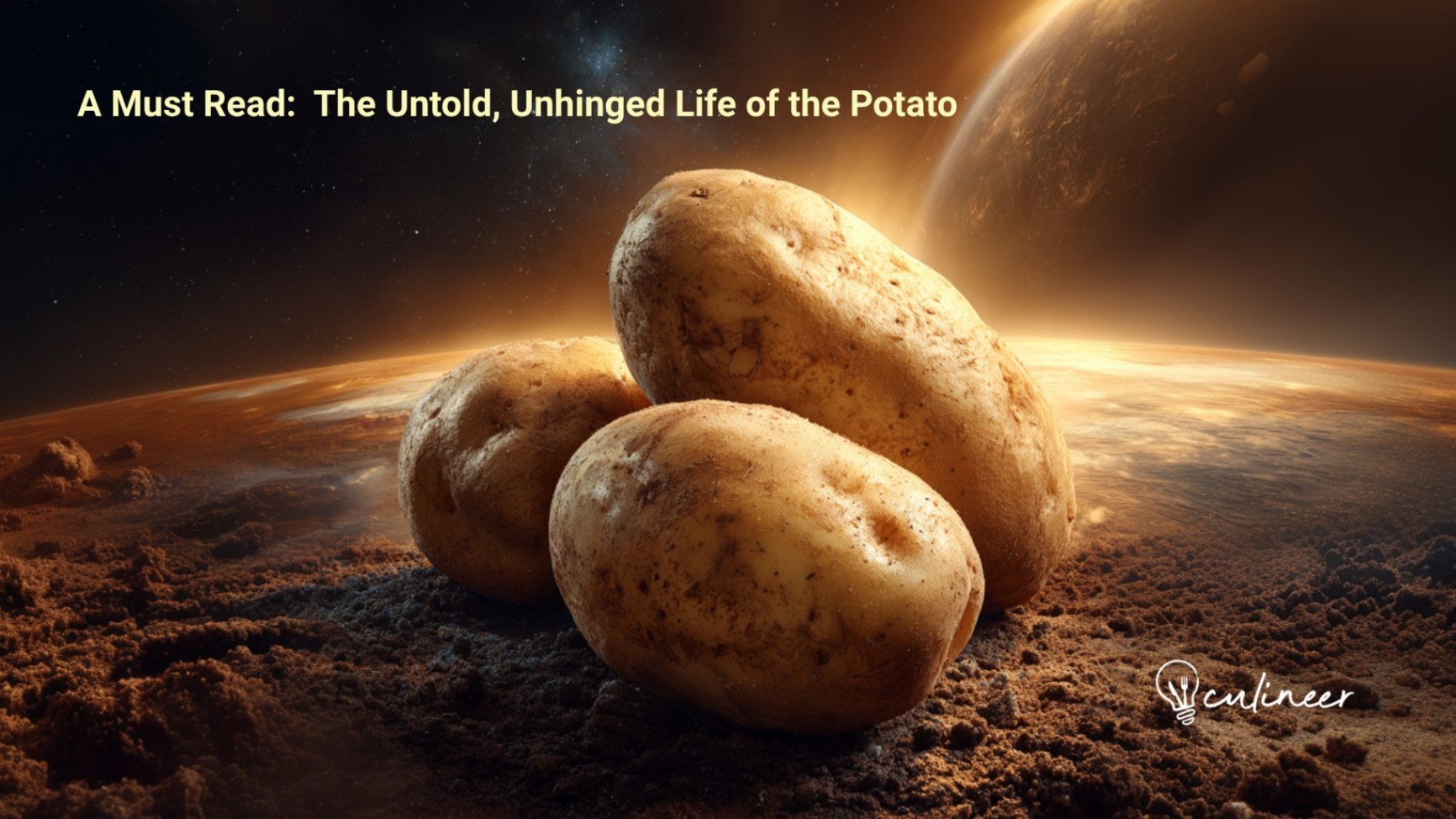
Why the Potato Might Just Be the Most Interesting Thing on Your Thanksgiving Table
You probably think of the potato as that dependable, low-key side dish—the ultimate empty canvas for butter, salt, and cheese. Maybe you even think it's just a root vegetable.
Wrong.
The potato, the world's third most consumed staple crop, has a past filled with royal schemes, deadly toxins, space travel, and technology that belongs in a sci-fi movie. It has literally changed the course of human history. Here are six facts about the potato that prove it's the real MVP of the produce aisle.
🥔 1. It’s Not a Root. It’s a Vibe. (And a Stem.)
Ready for a botany check? The potato is not a root vegetable. It's a stem tuber, which is a modified underground stem.
The proof? Look closely at your spud. Those little indentations you call "eyes" are actually nodes (or buds), which are features exclusive to stems and branches. The potato plant uses them to sprout new, genetically identical plants. Carrots and radishes? True roots. Potatoes? They're just doing their own thing, thriving underground while technically being part of the plant's shoot system.
☠️ 2. Its Family Is the Nightshade Gang
Speaking of identity crises, the potato belongs to the infamous Solanaceae family, a.k.a. the Nightshades. This is the same botanical family that includes belladonna (deadly nightshade) and the tomato (yes, your pasta sauce cousin!).
This lineage is why early Europeans were terrified of potatoes, thinking they were poisonous—and they weren't entirely wrong. The leaves, stems, and the potato itself, if exposed to light, can produce solanine, a natural toxin. If a potato turns green, that's your visual warning (the green pigment, chlorophyll, is a harmless sign that the toxic glycoalkaloids are also increasing). If it tastes bitter, toss it immediately. It’s the plant’s way of saying, "Back off, I’m poisonous."
👑 3. It Was a Forbidden Royal Commodity
When potatoes were first brought to Europe from the Andes, peasants refused to eat them. They were dirty, tasteless, and frankly, suspicious. So, how did the potato become a staple?
Enter Frederick the Great, King of Prussia (18th century). He wanted his people to adopt this super-efficient crop, so he played a psychological mind game. He planted a royal potato field and ordered armed guards to conspicuously protect it, declaring the potatoes an exclusive royal vegetable.
The trick? He secretly ordered the guards to look the other way if commoners tried to steal them. Naturally, people thought, "If the King is guarding it, it must be valuable," and they started sneaking in, stealing the "forbidden" tubers, and planting them in their own gardens. Frederick's reverse psychology marketing was a smashing success.
🚀 4. It Was the Original Space Explorer (Like in The Martian)
The potato was actually the first vegetable to officially be grown in space!
In 1995, NASA and the University of Wisconsin conducted an experiment aboard the Space Shuttle Columbia (mission STS-73) to see if tubers could form in microgravity [18, 20]. They could! This successful experiment was a major step toward developing food-producing life support systems for future long-duration missions—like, say, establishing a permanent base on Mars.
If you’ve seen the movie The Martian, you know the premise: Mark Watney (Matt Damon) is stranded and uses his botany skills to grow potatoes inside the habitat to survive. NASA’s real-life experiment is the precise scientific foundation that makes that entire plotline feasible. The humble potato is a strategic piece of space hardware.
⚡️ 5. Boiling a Potato Makes the Battery 10X Better
Need to charge your phone in a pinch? Don't grab a raw potato. Grab a boiled one.
Researchers at the Hebrew University of Jerusalem found that boiling a potato for just eight minutes dramatically lowers its internal resistance, allowing ions to move more freely. This simple preparation makes a potato battery—powered by the reaction between copper and zinc metals—up to ten times more powerful than one made from a raw potato. So, if you're ever powering an LED with a spud, make sure you cook it first.
📸 6. It Was the Key to Early Color Photography
Before Instagram filters, there was the Autochrome plate, the first successful commercial process for natural-color photography (1904), invented by the Lumière brothers.
The secret ingredient? Potato starch.
They used microscopic grains of potato starch, dyed red, green, and blue, and coated them onto a glass plate. These tiny grains acted as a color filter mosaic, allowing the plate to record a full-color image. Potato starch was chosen because of its superior purity and clarity, proving that this vegetable has been essential to both the global food supply and the visual arts for over a century.
🦃 This Thanksgiving, Give the Potato Its Flowers
So as you load up your holiday plate, take a second look at that humble potato. It’s more than a supporting actor. It’s a survivor, an innovator, a world traveler, a problem-solver, and somehow both a historical icon and a modern essential.
It doesn’t need a spotlight to shine — but it certainly deserves one.
So whether it’s mashed, roasted, scalloped, smashed, fried, or baked in its full golden glory, let the potato remind you of what makes Thanksgiving special: the ingredients that quietly nourish us, the growers who bring them to life, and the stories baked into every dish on the table.
Here’s to celebrating the foods that stay with us through centuries, cultures, and traditions - even the unhinged ones.