

Culineer Team
Member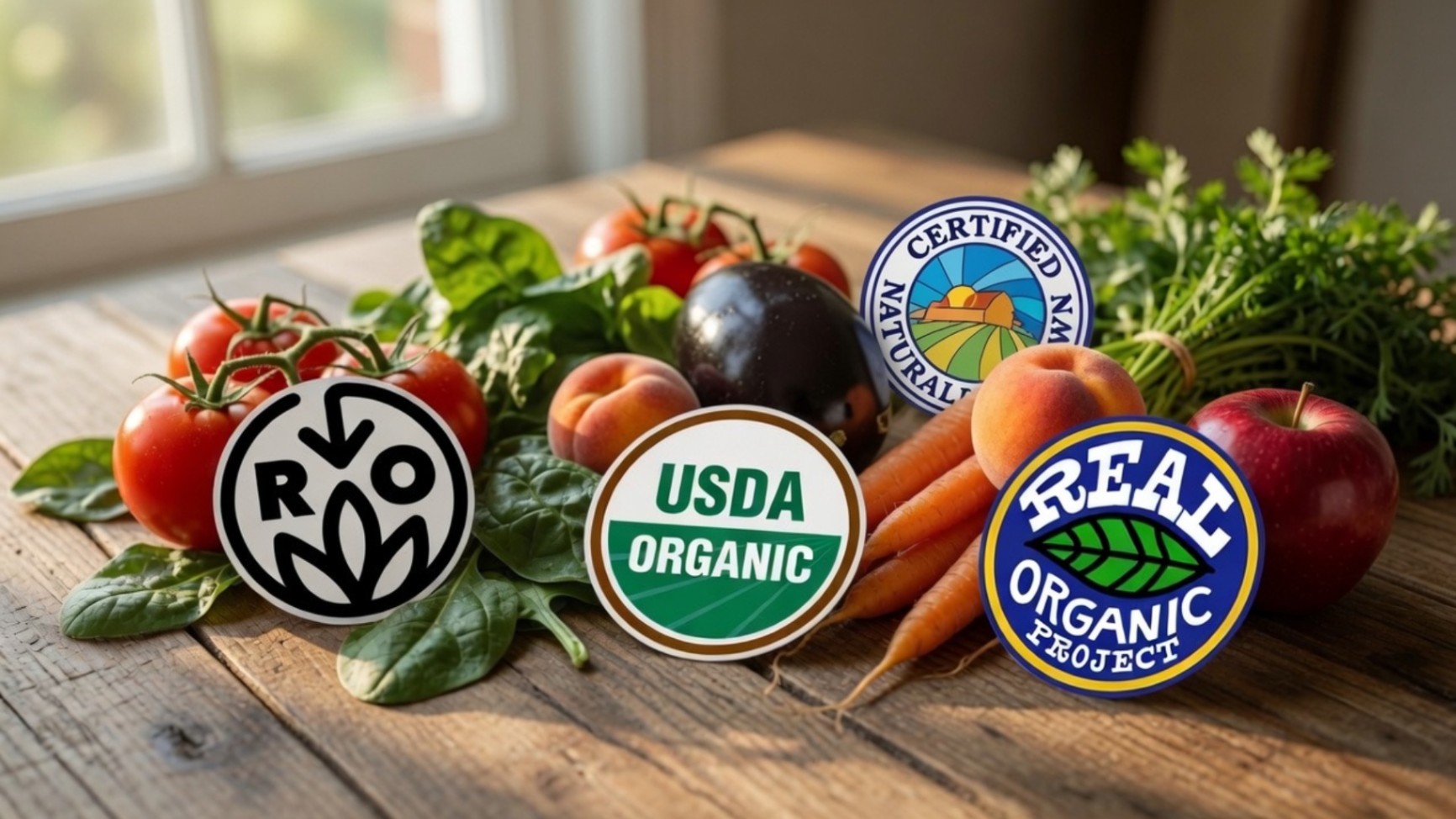
Decoding Organic: What Food Labels Really Mean
From USDA Organic to Real Organic and beyond - understand what these labels mean, why they exist, and how to choose food that aligns with your values.
In a Nutshell
Organic is one of the most recognized food label, but, it is also one of the most misunderstood.
The USDA Organic label is one of the most trusted food certifications in the United States, with clear standards for how food is grown and produced. At the same time, newer certifications such as Real Organic Project, Certified Naturally Grown, and Regenerative Organic Certified® have emerged to highlight additional values like soil health, regenerative farming, animal welfare, and support for small farms.
Our goal isn’t to tell you which label is “best.” It’s to help you (and I) develop an understanding of what each label represents, what it does (and does not) tell us, so we can make food choices that align with our own personal priorities.
Organic: A Movement Before It Was a Label
Long before the USDA Organic seal existed, organic farming was a philosophy.
Beginning in the 1940s, farmers and researchers began questioning the increasing use of synthetic fertilizers and pesticides. Their vision centered around healthy soils, biodiversity, natural ecosystems, and producing food in ways that worked with nature rather than against it.
As consumer interest grew, so did the need for consistent standards.
In 1990, Congress passed the Organic Foods Production Act, creating the framework for a national organic standard. The USDA National Organic Program (NOP) officially launched in 2002, establishing one legal definition of “organic” across the United States.
Today, the USDA Organic seal remains one of the most highly regulated food certifications in the country.
What Does USDA Organic Mean?
When you see the USDA Organic seal, it tells you that the product was produced according to federally regulated standards.
In general, certified organic production prohibits:
Most synthetic pesticides
Most synthetic fertilizers
Genetically engineered organisms (GMOs)
Sewage sludge
Food irradiation
For livestock, organic standards also include requirements for organic feed, outdoor access, and restrictions on the routine use of antibiotics.
But it is equally important to understand what the label does not mean.
Organic Does Not Mean Pesticide Free
Many consumers assume organic means no pesticides are used. That is not accurate.
Organic farmers can use pesticides approved under USDA organic standards. Many of these are naturally derived, although some approved synthetic materials are permitted when there are no suitable alternatives.
Like all farmers, organic growers need tools to protect crops from insects, diseases, and weeds. The difference is in which materials are allowed and how they are managed.
Organic is not about eliminating every agricultural input. It is about following a regulated system designed to limit certain practices and encourage more environmentally responsible production methods.
Why Has Organic Become More Complicated?
For many years, consumers thought “organic” represented one shared philosophy.
Today, the conversation has become more complex.
One of the most debated topics within organic agriculture is hydroponic production.
Hydroponic farms grow crops in nutrient-rich water rather than soil. These systems can use significantly less water, reduce certain pest pressures, and allow food to be grown closer to consumers.
However, some organic farmers and advocates believe that healthy, living soil is at the heart of organic agriculture. They argue that growing crops without soil does not fully represent the original principles behind the organic movement.
Others believe that the focus of organic certification should remain on production practices, such as avoiding prohibited substances and following approved standards -rather than the growing method itself.
The debate highlights an important point:
Even within organic agriculture, people have different ideas about how food should be produced.
The Rise of New Organic Certifications
As consumers have become more interested in how their food is grown, new certifications have emerged to communicate values that go beyond USDA Organic.
These certifications do not replace USDA Organic. Instead, they address additional questions consumers and farmers are asking.
USDA Organic
The question it answers:
“Was this food produced according to federal organic standards?”
USDA Organic provides a regulated baseline for organic production and handling.
Real Organic Project
The question it answers:
“Was this organic food grown using practices that emphasize soil-based farming and traditional organic principles?”
The Real Organic Project was created by organic farmers who felt that some modern interpretations of organic had moved away from the movement’s original focus on healthy, living soil.
Importantly, Real Organic Project is an add-on certification. Farms must already be USDA Organic certified before they can qualify.
Additional requirements include:
Soil-grown crops
Ecological farming practices
Healthy soil management
Meaningful livestock pasture access
Greater transparency around farming practices
Whether someone agrees with the philosophy or not, the Real Organic Project represents a larger conversation happening throughout agriculture: What growing practices should food certifications measure?
Regenerative Organic Certified®
Regenerative Organic Certified® builds on USDA Organic standards by adding additional requirements focused on:
Soil health
Animal welfare
Worker fairness and social responsibility
It reflects the growing interest in agriculture that not only avoids harm but actively improves ecosystems.
Certified Naturally Grown
Certified Naturally Grown was created with small farms in mind.
Many smaller farms use organic growing practices but choose not to pursue USDA certification because of the cost, paperwork, and administrative requirements.
Certified Naturally Grown provides an alternative verification model designed around direct-market farms.
Sometimes the Best Farm Doesn’t Have a Label
This may be one of the most important things for consumers to understand.
A farm without an organic certification is not automatically a conventional farm.
Many small farms use practices that may closely align with organic principles—or even exceed organic standards in certain areas—but choose not to become certified.
Why?
Certification requires:
Annual inspections
Detailed recordkeeping
Fees
Administrative time
For a small farm selling directly to its community, those resources may be better invested into growing food, caring for soil, and serving customers.
Imagine two farms:
Farm A
USDA Organic certified
Ships products hundreds or thousands of miles
Meets a rigorous national standard
Farm B
A small local farm
Uses compost, cover crops, crop rotation, and integrated pest management
Does not use synthetic pesticides
Has not pursued certification
Which one is better?
The answer depends on what matters most to you.
Certification provides important accountability and consistency. But a missing certification does not automatically tell you how a farmer grows their food.
This is why relationships with local farmers can be so valuable.
You can ask questions:
How do you manage pests?
How do you build soil health?
What fertilizers do you use?
Do you rotate crops?
What practices are most important to your farm?
Many farmers welcome these conversations because they allow them to share the care and knowledge behind their products.
Labels Are Helpful. Conversations Are Better.
Food labels serve an important purpose.
They create standards, provide transparency, and help consumers compare products.
But no single label tells the entire story.
A USDA Organic tomato grown in a certified greenhouse and a tomato grown by a nearby family farm using thoughtful sustainable practices may both be excellent choices.
They simply represent different values.
Some consumers prioritize:
Certified organic practices
Supporting local farms
Freshness
Seasonal eating
Soil health
Biodiversity
Affordability
Animal welfare
There is no single answer that works for everyone.
The best choice is the one that aligns with your priorities.
A Better Way to Shop
Instead of only asking:
“Is this organic?”
consider asking:
Who grew this food?
How was it produced?
Is it in season?
How far did it travel?
What practices matter most to me?
Can I learn more directly from the producer?
The more you understand about your food, the easier it becomes to make choices with confidence.
The Bottom Line
The USDA Organic label remains one of the strongest and most trusted food certifications available. It tells consumers that a product met rigorous national standards for production and handling.
But no single label tells the whole story.
As agriculture evolves, so do the ways we think about sustainability, soil health, farming practices, and community.
The best-informed shoppers don’t look for one perfect label.
They understand what each certification represents, ask thoughtful questions, and choose foods that reflect their own values.
At Culineer, we believe informed choices start with understanding. The more we know about where our food comes from about the people who grow it, the more connected we become to the food we bring to our tables.
References & Further Reading
USDA Agricultural Marketing Service – National Organic Program
https://www.ams.usda.gov/about-ams/programs-offices/national-organic-program
USDA Organic Labeling Standards
https://www.ams.usda.gov/rules-regulations/organic/labeling
Organic Foods Production Act of 1990
https://www.ecfr.gov/current/title-7/subtitle-B/chapter-I/subchapter-M/part-205
USDA National Organic Standards Board (NOSB) – Hydroponic and Aquaponic Discussions
https://www.ams.usda.gov/rules-regulations/organic
Real Organic Project
https://realorganicproject.org
Regenerative Organic Certified®
https://regenorganic.org
Certified Naturally Grown
https://www.naturallygrown.org
Demeter USA Biodynamic Certification
https://www.demeter-usa.org